


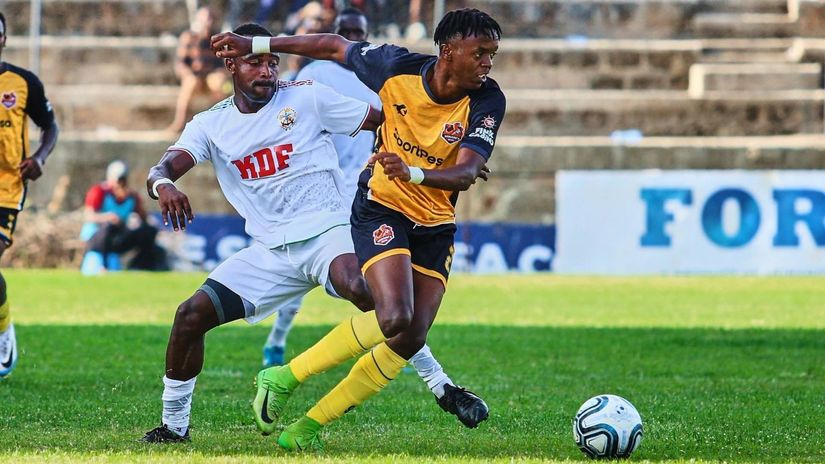
Murang’a Seal and Ulinzi Stars shared the spoils in an entertaining 2-2 encounter characterised by contrasting approaches to progression, direct attacking play and an increasingly transitional second half.Download our Mozzart Sport app for more newsMurang’a relied on patient circulation, positional width and combinations in wide areas to advance into the attacking third, while Ulinzi showed a greater preference for direct progression, using long diagonal passes and aerial deliveries to bypass the midfield.Despite taking the lead twice, Ulinzi could not protect their advantage as Murang’a demonstrated attacking resilience, with Josephat Lopaga and Mark Mwaniki delivering decisive contributions to secure a late equaliser.##NAJAVA_MECA_10105815##Murang’a Seal started in a 4-2-3-1 formation, with Prince Omondi in goal, Munyovi Dennis and Paul Ngugi forming the centre-back partnership, Tony Musa at left-back and Joseph Omulama on the opposite flank.Telvin Maina and Michael Owen operated as the double pivot, providing the central platform for Charo Majaliwa and Eli Saenyi on the wings, with Lucas Maina occupying the attacking midfield position behind Josephat Lopaga. Ulinzi Stars, meanwhile, adopted a 4-3-3 structure, with Sylvaine Ricks in goal, Brian Birgen and Andrew Otunda at full-back, Felix Otieno and Alex Masinde as the centre-back pairing, and Bill Okite and Joseph Ochieng operating in central midfield.Leonlevvit Osiago and Boniface Mucuiri provided width, while Joseph Mwangi operated behind Moses Nyambane.Alpha Onyango wonder strike rescues Gor Mahia from Nairobi United's jawsMurang’a began the contest with considerable urgency, prioritising quick restarts and looking to exploit transitional opportunities before Ulinzi could reorganise defensively.In their initial build-up, they frequently established a 4-2 base, with the goalkeeper, full-backs and double pivot providing the first line of circulation.The centre-backs positioned themselves relatively wide, creating passing angles around the goalkeeper and allowing the team to circulate possession with composure.This structure served two purposes: maintaining numerical security during the initial phase and creating opportunities to access the half-spaces through vertical, line-breaking passes once gaps appeared in Ulinzi's midfield structure.##NAJAVA_MECA_10101952##Their approach was not entirely possession-oriented, however. Murang’a alternated between patient circulation and more direct vertical deliveries into the attacking channels, particularly when Ulinzi's defensive line became disconnected from the midfield.By retaining the ball in their defensive third, they attempted to attract Ulinzi's pressing players forward before exploiting the spaces left behind them.This manipulation of the opposition's pressing structure allowed Murang’a to vary their progression rather than relying exclusively on short passing combinations.In the attacking third, Murang’a showed a clear preference for wide progression.FKFPL Wrap: Ponda's brace sinks Mathare United as Police rally late to hold HomeboyzTheir wingers were frequently positioned to isolate Ulinzi's full-backs in direct one-versus-one situations, while combinations along the flanks provided opportunities to create numerical overloads. Both full-backs advanced selectively, offering overlapping runs and additional width to support the wingers.Their forward movements also provided crossing and cutback opportunities into the penalty area. Lopaga complemented these movements by occasionally dropping away from the opposition's centre-backs to participate in the build-up, linking play and creating opportunities for the attacking midfielders and wingers to attack the spaces ahead of him.Ulinzi's build-up was considerably more direct. Although they initially attempted to progress from deeper positions, they frequently bypassed the midfield through long diagonal passes from their centre-backs towards attackers making forward runs behind Murang’a's defensive line.Their goalkeeper also utilised direct deliveries from restarts, targeting advanced areas and looking to establish possession around the attacking third.Former AFC Leopards chairman Shikanda rejects FKF ouster and accuses goons of disrupting Meru SGMRather than consistently attempting to construct attacks through the central midfield, Ulinzi sought to make the game more vertical, using the attacking movement of their forwards to stretch Murang’a's defensive structure.The second half brought immediate personnel and tactical adjustments from both sides.Ulinzi introduced Adrian Oloo on the right wing and Issa Lumumba, withdrawing Joseph Mwangi and Leonlevvit Osiago.The changes offered a different attacking profile in the wide areas, with Oloo providing additional attacking impetus.Sunderland forward headlines Ivory Coast U23 squad to face KenyaMurang’a also introduced Price Musebe for Michael Owen, partnering him with Telvin Maina in central midfield.Murang’a subsequently appeared more inclined towards direct progression.Their restarts became quicker, with Prince Omondi frequently delivering the ball towards the wingers to initiate counter-attacking situations before Ulinzi could establish their defensive shape.This adjustment reflected a greater urgency to attack forward and reduce the time spent circulating possession against an increasingly competitive Ulinzi side.##NAJAVA_MECA_10101956##The tactical contest translated into a breakthrough in the 58th minute.Following a deep free-kick, Adrian Oloo received possession on the right, carried the ball forward and identified Joseph Ochieng positioned outside the penalty area around Zone 14.Oloo laid the ball into his path, allowing Ochieng to unleash a powerful, accurately directed long-range effort beyond Omondi to give Ulinzi a 1-0 lead.McCarthy opens up on emotional Orlando return as Harambee Stars prepare for Bafana BafanaThe goal highlighted the value of second-phase attacking situations, with Ochieng exploiting the space outside the penalty area to produce a decisive finish.Murang’a responded with four substitutions in the 64th minute, introducing Elvin Barasa, Mark Mwaniki, Thadeus Kipkemoi and Michael Oloo. Lucas Maina, Tony Musa, Eli Saenyi and Charo Majaliwa made way.The changes refreshed the attacking personnel, particularly in the wide areas, while also introducing a different option in the attacking midfield position. The impact was immediate.Harambee Stars midfielder to work under new South African coach at YangaIn the 71st minute, Mwaniki found himself isolated against his marker on the right flank. Showing the confidence to attack the defender directly, he carried the ball close to the penalty area before delivering a cross into the box.Lopaga connected with a flicked finish, redirecting the delivery beyond Ricks to restore parity at 1-1. The goal demonstrated the importance of individual wide isolation in Murang’a's attacking approach, with Mwaniki's ability to eliminate his marker creating the opportunity for Lopaga to attack the delivery.However, Ulinzi restored their advantage just two minutes later.##NAJAVA_MECA_10105824##Following the restart, they won a free-kick in a deep midfield position, with Joseph Ochieng taking responsibility for the delivery.His ball into the penalty area found defender Masinde, who rose above the defensive challenge to direct a header past Omondi and make it 2-1.Ulinzi's second goal once again underlined their effectiveness from set-piece situations, particularly their ability to utilise aerial threats in advanced areas.Aldrine Kibet rallies fans ahead of Kenya U23 clash against Ivory CoastMurang’a refused to surrender the contest and continued pushing forward in search of another equaliser.Their persistence was rewarded in the 87th minute when Lopaga won possession around the edge of Ulinzi's penalty area. Showing excellent individual initiative, the striker carried the ball past two opposing defenders before delivering a cross towards the left side of the box.Mwaniki reacted quickest, arriving to convert and make it 2-2.##NAJAVA_MECA_10101966##Ultimately, the draw reflected two contrasting attacking approaches. Murang’a's patient build-up, wide combinations and individual quality in one-versus-one situations provided their primary route into the attacking third, while Ulinzi relied on direct progression, long-range shooting opportunities and set-piece execution.Although Ulinzi twice moved ahead, their inability to preserve those advantages allowed Murang’a to recover.Lopaga's involvement in both equalising goals and Mwaniki's decisive contribution off the bench illustrated the importance of individual attacking actions in a contest where neither side could establish lasting defensive control.
5