


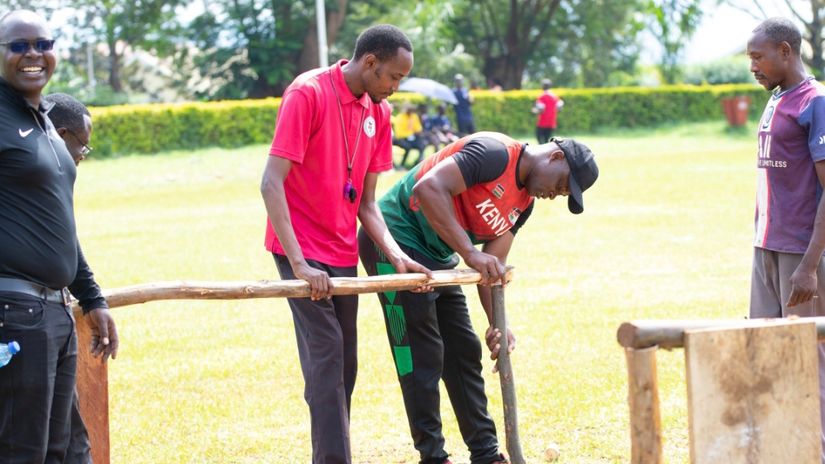
The Federation of East Africa Secondary Schools Sports Association (FEASSA) Games have become one of the most important competitions bringing together thousands of young athletes from across the region. But as the championship has grown, so too has an important question: are the hosts providing competition infrastructure that matches the stature of the event?The past four editions offer an interesting comparison. Download our Mozzart Sport App for more newsFrom Huye, Rwanda, in 2023, to Mbale, Uganda, in 2024, Kakamega, Kenya, in 2025, and now Morogoro, Tanzania, in 2026, each host has brought a different approach to staging the regional championship.On the basis of the playing facilities, distances between venues, accessibility and general competition readiness, the four editions provide a fairly clear picture. Rwanda comes out on top, followed by Kenya, Uganda and Tanzania.That ranking is not an assessment of the countries’ overall sporting infrastructure. ##NAJAVA_MECA_9907065##It is specifically about the experience of staging the FEASSSA Games across the four editions and, importantly, the ability of the venues to meet the demands of a multi-sport regional championship.Huye set the benchmark as the 2023 edition in Rwanda remains the strongest example of what FEASSA can look like when venue planning is closely aligned with the competition.The 20th edition was staged in Huye district, with 2,924 participants from Rwanda, Kenya, Uganda, Tanzania and Zanzibar taking part in 13 disciplines. FEASSSA 2026: Morogoro’s football faithful puts Tanzania’s Premier League ahead of EPL obsessionRwanda’s preparation was also subjected to a formal inspection process before the Games.The inspection identified Huye Stadium as the principal venue, with a capacity of about 7,000 and facilities for football and the opening and closing ceremonies. The University of Rwanda’s Huye Campus was earmarked for basketball, football, badminton, athletics and tennis, while GSO Butare was designated for swimming and handball. Rugby was assigned to Rwabuye TSS.That distribution is important, FEASSSA is a competition involving multiple disciplines simultaneously. A host does not necessarily need every sport inside one compound, but venues must be sufficiently accessible, suitable for their sports and capable of handling the volume of teams moving between them and Huye managed that balance relatively well.The Rwandan model also demonstrated that hosting FEASSSA can be about more than simply finding fields. The 2023 Games incorporated community activities, including Umuganda, and gave visiting athletes an opportunity to interact with the host communities.Why Harambee Stars midfielder will not play against West Ham this weekendThere were shortcomings but overally, the venue planning and organisation provided the strongest experience of the four editions under comparison. It is therefore not surprising that Huye ranks first. Mbale exposed the challenge of spreading a multi-sport championship too widely, Uganda’s 2024 edition presented a different picture.The Games were centred around Mbale and Bukedea, with FEASSSA inspectors evaluating more than 17 competition venues before the championship. The list included Mbale Stadium, Mbale Sports Club, Mbale Rugby Club, Mbale Cricket Ground, Islamic University in Uganda and several other facilities in Mbale, alongside Bukedea Comprehensive School, Amus College and other venues in Bukedea.On paper, it was an impressive inventory. Bukedea Comprehensive School, for example, had an indoor arena with a reported 4,000-seat capacity, a semi-Olympic swimming pool and a natural grass pitch.CS Mvurya provides timeline for Talanta Stadium test matchesAmus College also provided several pitches and a stadium. The problem was not necessarily the number of venues. It was distance and consistency.During the Games, some football matches were played at Bukedea Comprehensive School, more than 30 kilometres from Mbale town, where several other disciplines were being conducted.For teams competing in different sports, this created a logistical burden. Movement between venues became an important part of the competition experience.There was also a difference in the quality of individual playing facilities. Hockey provides perhaps the clearest example.Despite the availability of hockey infrastructure, the goalposts at the venue were not of the required standard. The problem was significant enough that coaches and teams had to improvise, with makeshift wooden goalposts being constructed before matches could properly get underway.The result was inevitable: delays to the competition schedule. This is an important lesson for FEASSA hosts.A venue can technically exist on an inspection document, but that does not automatically mean it is ready to host an international school competition.The playing surface, dimensions, equipment, markings, goalposts, changing facilities, sanitation, officials’ areas and spectator arrangements all matter.Talanta Sports City Stadium nears completion (Photos)Uganda therefore had some strong facilities, particularly in Bukedea and Amus College, but the combination of distances and inconsistencies puts the 2024 edition behind Rwanda.Kakamega brought FEASSA closer to a centralised model. Kenya’s 2025 edition in Kakamega moved in the opposite direction.Rather than relying on two widely separated towns, the host county concentrated a substantial portion of the competition around Kakamega town and Masinde Muliro University of Science and Technology (MMUST), while using other nearby venues for specific disciplines. That concentration was one of Kakamega’s biggest strengths.For a tournament involving hundreds of teams and thousands of athletes, having multiple disciplines within a relatively compact area reduces travel time and simplifies logistics. FEASSA-winning coach urges KSSSA to expand school games slots to unlock hidden talentIt also makes the championship easier for officials and spectators to navigate.But Kakamega was not without its own shortcomings.The inspection report identified areas requiring improvement at several venues. Kakamega Rehabilitation School, for instance, needed drainage improvements and grassing of bare patches. At Booker Academy, broken tiles in the hall needed attention. MMUST’s cricket oval and swimming pool required work, while Bukhungu Stadium was still under construction during the inspection.Indeed, as late as July 2025, KSSSA officials were saying that facilities needed to be completed by the end of the month ahead of the Games.Nevertheless, Kakamega delivered a more compact competition environment than Mbale and offered a stronger concentration of facilities. It therefore ranks second in this comparison.Morogoro presents perhaps the most interesting case because the city entered the 2026 Games with considerable confidence from the organisers.Before the championship, FEASSSA Secretary General David Ngugi said an inspection of the city’s facilities and accommodation had left officials satisfied with Morogoro’s preparedness. FEASSA Games: Uganda’s winning formula that keeps delivering goldHe highlighted the city’s accommodation capacity, sports facilities and standard swimming pools, while also pointing to improved transport links.Morogoro Teachers College was designated as the main competition venue and the Secretariat, with Sokoine University of Agriculture also playing a major role. And there is no question that Morogoro has some good facilities.Compared with Mbale, the venues are more manageable in terms of the overall radius of the competition. The spread is estimated at around 10 kilometres, rather than the more than 30-kilometre separation experienced by some teams in Uganda.But the problem in Morogoro has been less about where the venues are and more about whether every playing venue is fit for the sport it is hosting.Hockey has exposed that weakness. The hockey field being used for the FEASSA competition is noticeably smaller than a standard field and has presented challenges for teams. More strikingly, the goalposts were initially made smaller.According to the organisers, the reduction was intended to make the goalposts proportional to the reduced dimensions of the playing field. That explanation, however, did little to resolve the practical problem for teams competing under the standard rules of the sport.The solution eventually came from the teams themselves. Coaches and participating schools had to contribute financially to have standard-sized goalposts fabricated locally. Each team contributed Tsh20,000 towards the cost, with the teams also assisting in the process of getting the posts ready.That is a remarkable example of teams taking ownership of their competition environment. But it also raises a larger question about hosting standards. Should visiting schools have to contribute money to correct basic playing equipment at a regional championship?The answer should probably be no. The host is not expected to build a new stadium for every edition. FEASSSA rotates among countries precisely because different member states have different levels of infrastructure.But once a host is awarded the games, the basic competition requirements of each discipline should be established well in advance and verified before teams arrive.A hockey goal post should just be that. A playing field should meet the requirements of the sport. And a competition should not have to wait for coaches to construct or finance basic equipment before matches can begin.That is where Morogoro currently falls short. The bigger issue is not stadiums, it is standardisation. The four editions reveal an important distinction, hosting FEASSA is not simply about having enough fields. It is about having the right fields.The 2024 Ugandan experience showed how a large number of venues can create logistical problems when they are too widely dispersed. The 2026 Tanzanian experience shows the opposite problem: venues may be relatively accessible, but sport-specific shortcomings can undermine the quality of competition.Kakamega demonstrated the benefits of concentration, even though several facilities were still undergoing improvements shortly before the Games. Rwanda, meanwhile, provided the most balanced combination of accessibility, venue suitability and competition planning.There is also a lesson for FEASSSA itself, the federation has grown considerably since its establishment in 2001. The 2023 edition alone attracted more than 2,800 participants, while Uganda expected more than 3,500 participants for the 2024 championship.The 2026 edition is even bigger, with more than 5,000 athletes expected across the expanded competition programme. At that scale, venue standards can no longer be treated as a secondary consideration.The inspection process has to go beyond checking whether a venue exists. It should establish whether the venue meets the technical requirements of each sport, whether equipment is compliant, whether transport times are realistic, whether medical and emergency facilities are available, and whether the venue can operate effectively throughout the competition.This is not to say that Morogoro is a poor host, far from it. The city has accommodated a huge regional championship and, compared with previous editions, has provided a relatively manageable competition footprint.But the hockey situation is a warning, FEASSSA must leave a legacy beyond the medals, the athletes will eventually leave Morogoro, the trophies will go home with the winners, the results will enter the record books. But the real measure of a FEASSA host should also be what remains after the final whistle.
71