


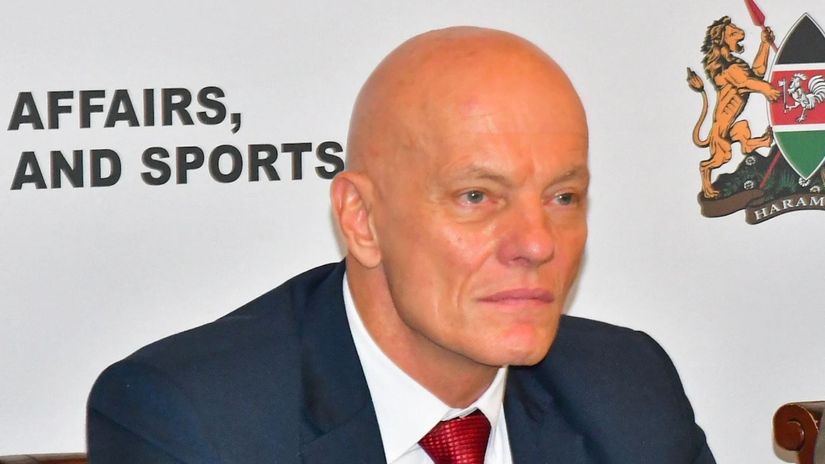
The World Anti-Doping Agency (WADA) is shifting its approach from primarily targeting athletes to dismantling the networks that manufacture, distribute and supply performance-enhancing drugs.The agency says the new top-down strategy is designed to target coaches, doctors, suppliers, traffickers and other players who operate behind the scenes, recognising that athletes are often the most vulnerable link in the doping chain.Download our Mozzart Sport App for more newsSpeaking during a press conference on Tuesday, 6 October, WADA Director of Intelligence and Investigations Gunter Younger said the evolution of doping required a fundamental rethink of how the global fight against doping is conducted.“I’ve been working with WADA for 10 years now, and we have seen a revolution in doping. Traditionally, what we as a sports organisation target is the athlete. We try to find out where the athlete is doping, but our powers as a sports organisation are very limited,” Younger said.##NAJAVA_MECA_9280##According to Younger, anti-doping organisations can conduct interviews and gather intelligence from athletes, but their investigative powers are limited when it comes to pursuing the wider networks behind the supply of prohibited substances.“We cannot go higher and investigate those the president was referring to, such as coaches, doctors and other people involved in the supply chain,” he said.The limitation prompted WADA to develop a strategy that goes beyond the athlete and instead targets the source of performance-enhancing drugs.“We needed to think of a new concept because athletes are the weakest and most vulnerable people in this industry. Therefore, we developed a top-down strategy, meaning that we target the supply of performance-enhancing drugs rather than focusing only on the athlete,” Younger explained.Kenya American Football takes major step into Kenya’s Olympic familyAt the heart of the strategy is greater cooperation between anti-doping organisations and law enforcement agencies.Younger said the model was first tested in Europe, where WADA brought together national anti-doping agencies, experts and law enforcement officers to share intelligence and identify areas where they could work together.“The concept is quite simple: bring national anti-doping agencies, experts and law enforcement together in one room and allow them to work out the synergies, as well as how they can cooperate and help each other,” he said.How AK is leveraging AFCON 2027 upgrades to prepare Kasarani for 2029 World ChampionshipsThe approach has since expanded beyond Europe to Asia and other parts of the world, with WADA reporting significant results.“To date, we have conducted around 250 operations globally, resulting in more than 90 tonnes of performance-enhancing drugs being seized,” Younger said.He added that the seizures have prevented an estimated 1.8 billion doses of performance-enhancing drugs from reaching the market.“That is 1.8 billion doses that cannot be used by athletes, children or anyone else who might want to use them. That has been a huge success,” he said.Kenya is now being brought into the network as WADA seeks to strengthen cooperation between the Anti-Doping Agency of Kenya (ADAK), law enforcement and other government agencies.WADA boss in Kenya as country steps up fight against dopingYounger said Kenya's existing infrastructure and willingness among different agencies to cooperate provided an ideal foundation for the strategy.“That is one of the reasons why we are here, and we are very grateful that Kenya committed to hosting one of these workshops. We are bringing the knowledge, but the infrastructure and the people are already here,” he said.The workshop brought together eight organisations, including investigators and immigration officials, alongside ADAK and WADA representatives.For Younger, the willingness of the agencies to work together is a crucial first step.“What I saw this afternoon was a success. We had eight organisations, including investigators and immigration officials, all in one room and all ready to work with the Anti-Doping Agency of Kenya and WADA. The infrastructure is here, the people are here, there is a willingness to work together, and we have the commitment of the government,” he said.Younger now wants Kenya to turn that commitment into measurable results and emerge as a model for other countries in the region.Omanyala explains opening sprints club in St Joseph’s Boys KitaleHe believes the country has the potential to become a regional leader in intelligence-led anti-doping investigations within the next two years.“That is the best possible condition for what I would like to see in two years when I come back here and say: Kenya is now a role model, not only for East Africa but for the whole region. Every other country should look at Kenya and say, ‘This is the best practice we should adopt,"he said.The strategy will operate under the Global Anti-Doping Intelligence and Investigations Network (GAIIN), which WADA is using to connect anti-doping bodies with law enforcement and intelligence partners.Eliud Kipchoge named Dakar 2026 ambassador as he prepares to mentor young athletesYounger said the immediate objective is to translate the cooperation established during the workshop into concrete investigations and successful operations.“We are very excited to start working from today with our colleagues at the Anti-Doping Agency of Kenya and law enforcement agencies. I am very confident that in two or three years, you will hear some success stories,” he added.
7
previous post